

The Ultimate Guide to Commercial Robotic Lawnmowers 2025: What Professionals Need to Know
Key Takeaways
- Commercial robotic lawnmower market is projected to reach $1.52 billion by 2025.
- Professional-grade models offer advanced features like RTK technology for precise positioning.
- High-capacity mowers enhance efficiency with extended battery life and multi-zone management.
- Selecting the right mower involves assessing area, terrain, budget, and technical requirements.
- Future trends include AI integration, IoT connectivity, and sustainability enhancements.
Professional-Grade Models: Setting New Standards

Professional-grade robotic lawnmowers are distinctly different from their residential counterparts, offering capabilities that meet the demanding needs of commercial applications. These machines are engineered to handle:
- Larger areas (up to 18 acres for models like the Husqvarna CEORA)
- Challenging terrains and steep slopes
- Extended operating hours
- Multiple zones and complex layouts
What sets professional-grade models apart is their advanced technology integration. For instance, many feature industrial-grade RTK (Real-Time Kinematic) technology, enabling centimeter-level positioning accuracy even in challenging conditions like hillside operations and under dense tree canopies.
Explore the key differences between professional-grade and residential models to determine the best choice for your needs.
High-Capacity Mowers: Maximizing Efficiency
High-capacity mowers represent the pinnacle of commercial robotic lawnmower technology. These machines are designed for optimal performance in large-scale operations, featuring:
- Extended battery life (up to 240 minutes of continuous operation)
- Large cutting widths
- Multi-zone management capabilities
- Automatic charging systems
For example, the Echo TM-2000 demonstrates the impressive capabilities of high-capacity mowers, covering approximately 6.4 acres on a single charge while managing multiple zones simultaneously. This level of efficiency can result in up to 50% cost savings through reduced labor and energy consumption.
Discover the benefits of using high-capacity robotic mowers in commercial spaces to achieve significant cost savings.
Leading Commercial Models Comparison
Let’s examine some of the top commercial robotic lawnmowers available:
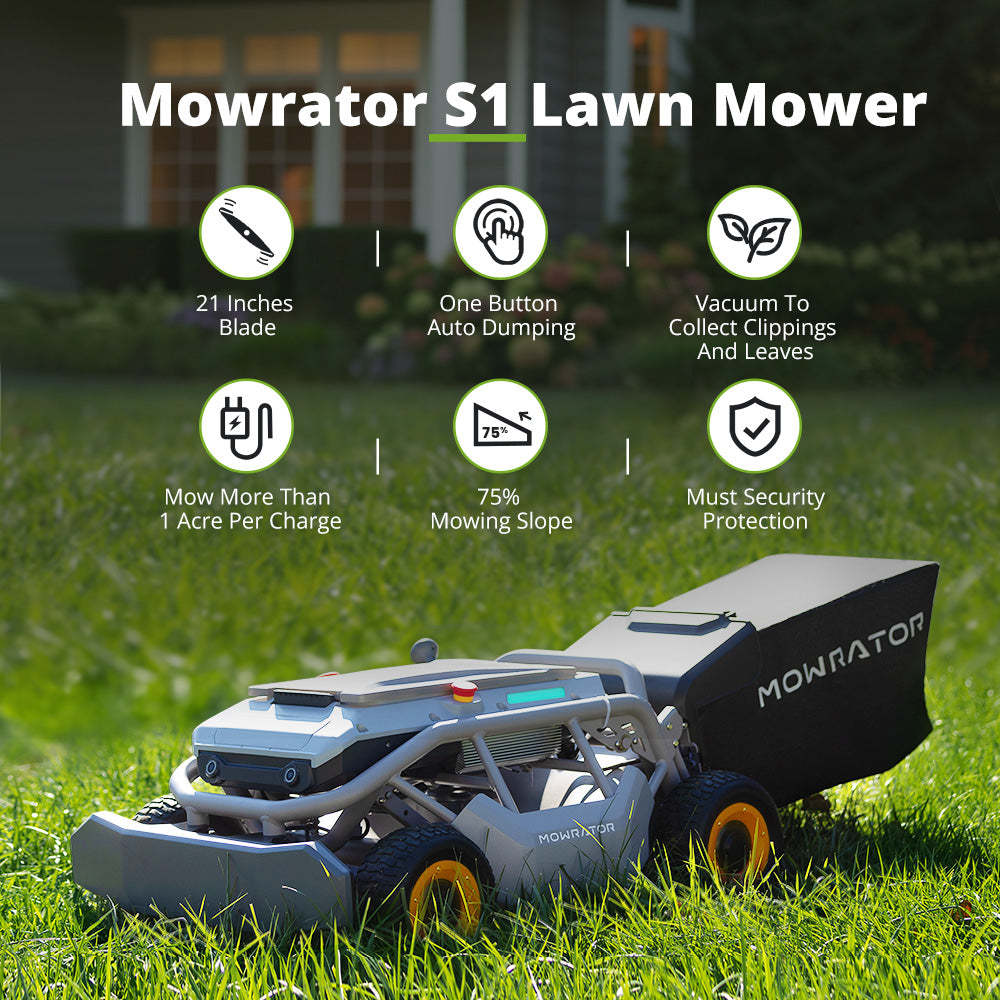
- Mowrator S1 4WD:
- Coverage: 1.125 acres per 135 minutes
- Slope handling: 75%
- Special features: Multiple cutting options (mulching, bagging, rear discharge)
- Husqvarna Automower 450X EPOS:
- Coverage: 2.5 acres per 270 minutes
- Slope handling: 45%
- Special features: Electric height adjustment, smart connectivity

- Echo TM-2000:
- Coverage: 6 acres per 240 minutes
- Key features: Smartphone connectivity, adjustable cutting height
- Extended battery life with 25.6V lithium-ion battery

- Husqvarna CEORA:
- Coverage: Up to 18 acres
- Key features: Continuous operation, automatic charging
- Advanced features: Customizable mowing patterns, virtual boundary control

Choosing the Right Commercial Robotic Lawnmower
Consider these essential factors when selecting a commercial robotic lawnmower:
-
- Area Assessment:
- Measure the total area to be maintained
- Account for multiple zones or separate locations
- Consider future expansion needs
- Terrain Evaluation:
- Assess slope gradients
- Identify obstacles and challenging areas
- Consider surface conditions
- Area Assessment:
Find solutions to overcome slope challenges with all-terrain robotic mowers.
- Budget Considerations:
- Initial investment ($4,000 – $30,000 range)
- Operating costs
- Maintenance expenses
- Technical Requirements:
- Battery life needs
- Charging infrastructure
- Remote monitoring capabilities
Future Trends and Innovations

As we move toward 2025, several exciting developments are emerging:
-
- Artificial Intelligence:
- Enhanced obstacle detection
- Improved navigation systems
- Smarter terrain adaptation
- Artificial Intelligence:
Stay updated on the latest trends in smart lawn care and AI integration in robotic mowers.
- IoT Integration:
- Advanced remote monitoring
- Fleet management capabilities
- Integration with other smart systems
- Sustainability Features:
- Improved energy efficiency
- Alternative power sources
- Reduced environmental impact
Best Practices for Implementation
To maximize the benefits of commercial robotic lawnmowers:
- Staff Training:
- Proper operation procedures
- Basic maintenance
- Troubleshooting protocols
- Maintenance Schedule:
- Regular inspections
- Preventive maintenance
- Seasonal adjustments
- Performance Monitoring:
- Track operating hours
- Monitor efficiency metrics
- Evaluate cost savings
Frequently Asked Questions
- What are the main benefits of using commercial robotic lawnmowers?
- How do I choose the right robotic lawnmower for my business?
- What maintenance is required for commercial robotic lawnmowers?
What are the main benefits of using commercial robotic lawnmowers?
Commercial robotic lawnmowers offer increased efficiency, reduced labor costs, consistent mowing quality, and eco-friendly operation, making them an excellent investment for landscape maintenance businesses.
How do I choose the right robotic lawnmower for my business?
Consider factors such as the size of the area to be maintained, terrain complexity, budget, technical requirements, and the specific features offered by different models to ensure you select a mower that meets your business needs.
What maintenance is required for commercial robotic lawnmowers?
Regular maintenance includes inspecting blades, cleaning sensors, updating software, ensuring battery health, and scheduling preventive maintenance to keep the mower operating efficiently and prolong its lifespan.


